
By Patricia L Johnson
Article III, §1, of the Constitution provided for the creation of a Supreme Court. Our forefathers considered the creation of this court such a high priority that the very first bill introduced in the Senate was the Judiciary Act of September 24, 1789 (1 Stat. 73). Our newly formed Supreme Court met on February 1, 1790 in New York City, the Nation’s Capital at the time.
The ultimate responsibility of the Supreme Court of the United States of America is to provide the American people with the promise of EQUAL JUSTICE UNDER LAW and currently consists of nine individuals, a Chief Justice of the United States and eight associate justices. The total number of associate justices is determined by Congress (28 U. S. C. §1) and has been changed six times before settling on a total of nine justices in 1869.
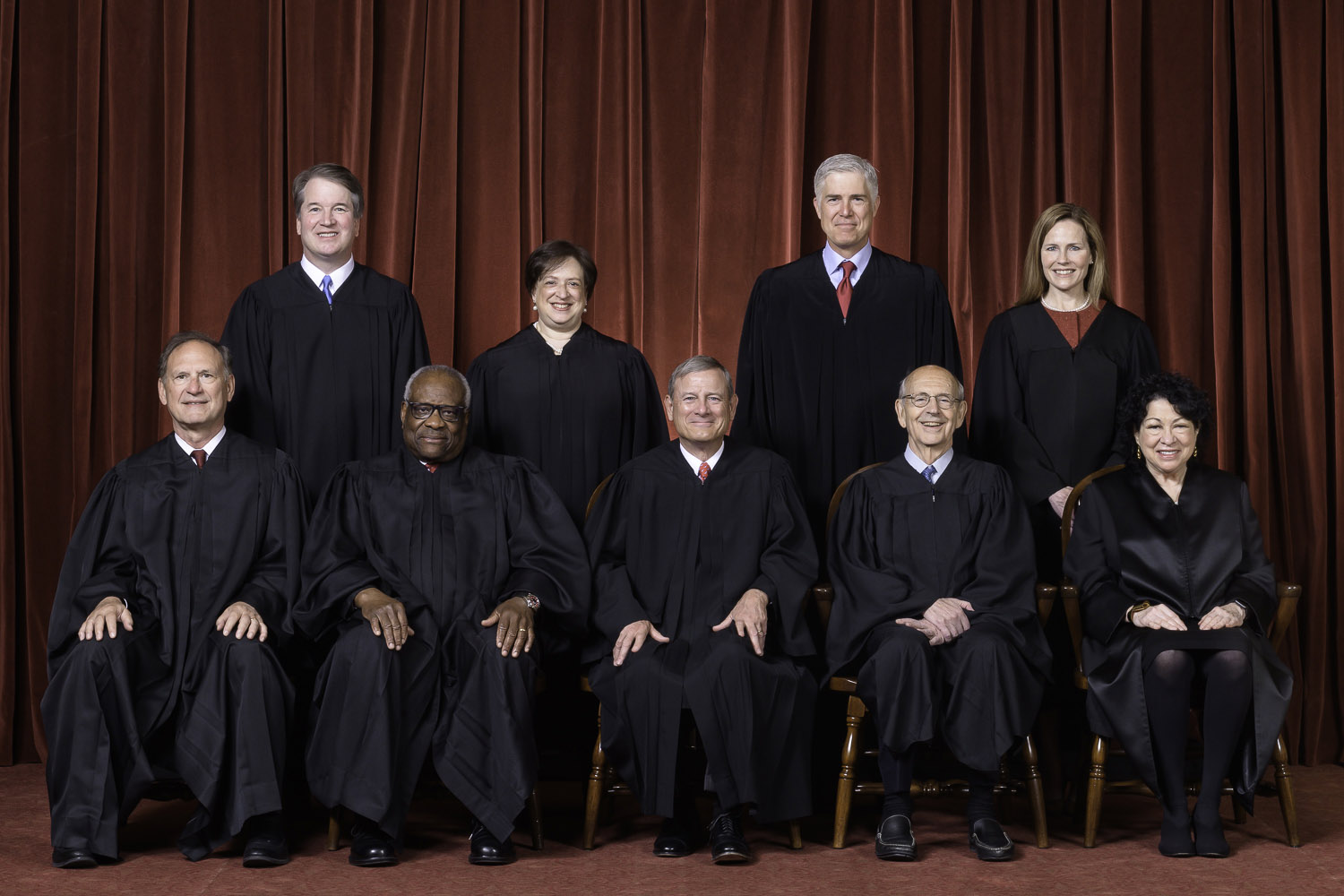
Our current Supreme Court consists of the following individuals:
| John G. Roberts, Jr. | Chief Justice of the United States | W | M |
| Clarence Thomas | Associate Justice | B | M |
| Stephen G. Breyer | Associate Justice | W | M |
| Samuel A. Alito, Jr. | Associate Justice | W | M |
| Sonia Sotomayor | Associate Justice | H | F |
| Elana Kagen | Associate Justice | W | F |
| Neil M. Gorsuch | Associate Justice | W | M |
| Brett M. Kavanaugh | Associate Justice | W | M |
| Amy Coney Barrett | Associate Justice | W | F |
W = White 77.8%
B = Black 11.1%
H = Hispanic 11.1%
M = Male 66.7%
F = Female 33.3%
Based on the above percentages our current Supreme Court is not at all reflective of the diverse population of the citizens in the United States, which follows. Without a doubt the next appointment to the Supreme Court should be a female, but would increase the Black composition of the court to 22.2%.
The Census Bureau indicates the following data for July of 2021 as far as percentages of the three major races and sex:
60.1% = White Only
13.4% = Black Only
18.5% = Hispanic or Latino
Female = 50.8%
Females now represent more than ½ of the citizens in this county and for decades females have been underrepresented in the Supreme Court, but should a lifetime appointment to the Supreme Court ever be based on anything other than qualifications?
As a female, there is nothing I would like better than to see another woman appointed to the Supreme Court because that is the fair and just thing to do, but as a citizen I also have to live with the decisions made by the court and I think I would prefer to see the most qualified individual appointed, rather than an appointment to make up for past wrongs, or to fulfill a campaign promise.
© 2022 Patricia L Johnson


